 Hejlsvig Consulting
Email Marketing
Emails that arrive, and journeys that run themselves. Mailchimp, Klaviyo and Salesforce Marketing Cloud, connected to your CRM and shop.
What you gain by getting this right, and what it costs to get it wrong.
Deliverability is invisible until it's broken
Authentication, list hygiene, and how a new sender address is warmed up decide whether your email reaches the inbox or the spam folder. Most teams discover the problem only when revenue dips.
Personalisation at scale beats blast campaigns
A newsletter sent to everyone competes with every other newsletter in the inbox. An email triggered by what someone just did answers a question they actually have. The difference is architecture, not luck.
The email tool has to know what the customer does
When the email tool doesn't know what someone bought or clicked, you can only send from lists. And nobody can see afterwards what a send actually meant for revenue. We close those gaps.
Most companies send too little, not too much. And some of what they do send lands in spam without anyone noticing. Open rates simply drift down, and nobody can say why.
So we start with the dull part: does the email arrive at all. Are SPF, DKIM and DMARC set up correctly. Are there a thousand addresses on the list that have not opened anything in two years and are dragging your reputation down at Gmail. It is rarely exciting work, and it is often what moves the needle most.
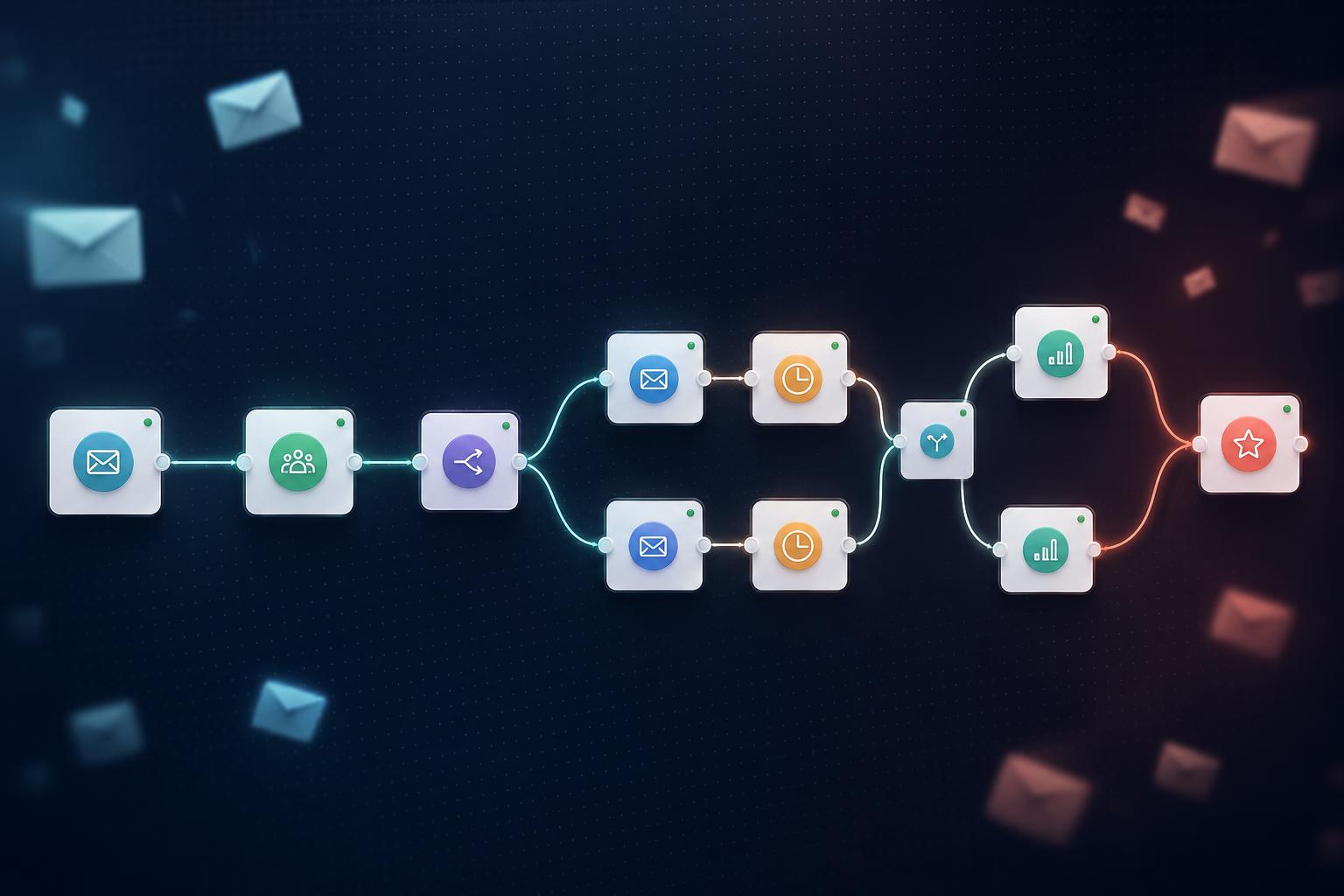
Then we build the emails that send themselves. A welcome sequence for new customers, a reminder for the ones who left something in the basket, and a message to those who have not bought in a year. Written once, running afterwards without anyone touching them.
We work in Mailchimp, Klaviyo and Salesforce Marketing Cloud, and connect them to your CRM and online shop. That connection is what lets you send based on what people do, rather than on when you have time.
Should you switch platform? Maybe. But we will only say so once we have seen whether the one you have can do what you are missing.
How It Works
We audit your current setup, deliverability included, and help pick the right platform
We build the templates and journeys, and connect them to your CRM and shop
We train your team and follow up until it runs without us
Concrete situations where this makes the biggest difference.
E-commerce lifecycle
Welcome flows, abandoned carts, post-purchase follow-up and win-back, wired into Klaviyo or SFMC and your shop platform.
Nurture and sales handoff
Lead scoring, nurture tracks, and a clean handover of sales-ready leads to Salesforce. So marketing and sales finally agree on what a good lead looks like.
Migration & re-platforming
Moving from Mailchimp to Klaviyo? From SFMC to something leaner? We migrate templates, flows, segments, and data without losing history.
Frequently asked questions
Guides on this
- Email platforms: Brevo counts emails, the others count contacts, and that sets the price
For 10,000 contacts and a weekly newsletter, Brevo is cheapest and ActiveCampaign over twice the price. Send often to a small list and it flips.
- Email sender requirements: miss them and your mail can land in spam with no warning
The 0.3 percent spam-report ceiling applies to everyone sending to Gmail and Yahoo, not just big senders. Four free checks in a morning show if you comply.
Articles on this
- Braze: no price anywhere, but the pricing model is public
Braze sells without public prices, yet spells out what a contract is made of. Here is the model, the holes in it, and the questions that decide the price.
- Brevo: the price follows your emails, and the EU promise covers storage, not access
Cheapest of four platforms at 10,000 contacts and a weekly newsletter. But data stored in France and Belgium can be reached from India and the US.
- ActiveCampaign: the automation is real, the invoice has four lines
ActiveCampaign is the dearest of the four for a weekly newsletter, with users and CRM on top. New accounts also pay for unsubscribed contacts.
- Mailchimp: you pay for unsubscribed contacts until you archive them
The bill is set by the period's peak contact count, and between 10,000 and 15,000 contacts the price rises 70 percent. How to land on the cheaper step.
- Klaviyo: the price follows your list, not your sends
Built for Shopify shops. A text to Germany costs about eleven times the US rate, and keeping data in the EU currently takes a new contract.
Are your emails getting through?
Tell us which platform you use and what is not working. You get an honest answer on whether it can be fixed in the one you have, or whether it is time to switch.